Products
We production/delivery time is short, and our service is very efficient.

Amidst the trend of upgrading aerospace equipment towards "lightweight, high reliability, long lifespan, and rapid delivery", thermoplastic composites, leveraging their core advantages of "excellent mechanical properties, repeatable melt processing, and strong recyclability", are gradually replacing traditional thermosetting composites and metallic materials. They have become the preferred solution for critical components such as airframe load-bearing structures, satellite brackets, and engine parts. However, the joining process of thermoplastic composites remains a core bottleneck restricting their large-scale application. Traditional mechanical connections (bolts, rivets) suffer from defects like "stress concentration, significant weight increase, and poor sealing performance", while adhesive bonding faces issues such as "long curing period, strong environmental sensitivity, and difficult rework", making it difficult to meet the aerospace manufacturing requirements for "efficiency, reliability, and integration"
Laser welding technology, through its inherent characteristic of "material fusion and bonding under thermal action", is compatible with the fusible properties of thermoplastic composites, achieving a "non-destructive, high-strength, and rapid" connection of components.
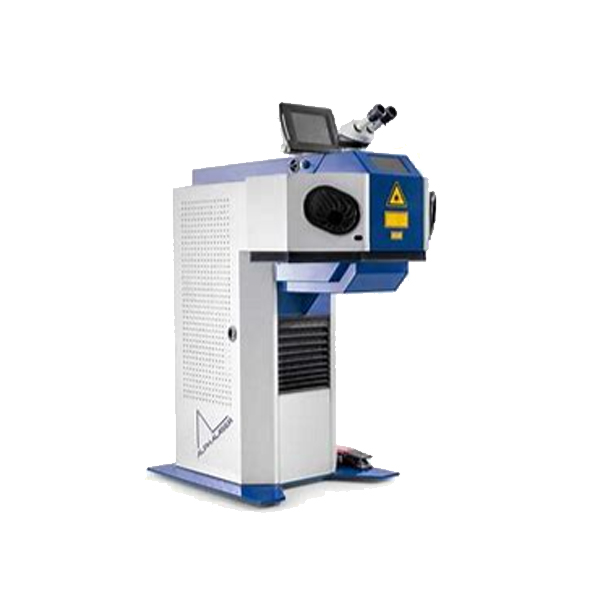
Laser welding technology, through its inherent characteristic of "material fusion and bonding under thermal action", is compatible with the fusible properties of thermoplastic composites, achieving a "non-destructive, high-strength, and rapid" connection of components.
1. Core demand for aerospace thermoplastic composite connections: Adaptation logic of welding technology
The service environment of aerospace equipment is extremely harsh (high and low temperature cycling, strong vibration, high altitude and low pressure), posing "triple core demands" on the performance of thermoplastic composite joints. The inherent advantages of welding technology precisely meet these demands.
1. Mechanical reliability: The dual bottom line of load-bearing capacity and fatigue resistance
The connection part is the "mechanically weak area" of the component, which needs to meet both static load-bearing and dynamic fatigue requirements: the fuselage panel connection needs to withstand aerodynamic loads and the fuselage's own weight, with a tensile strength of ≥300MPa; the satellite bracket connection needs to withstand vibration impact during the launch phase (acceleration ≥20g), and its performance degradation after 10⁴ fatigue cycles should be ≤10%. Welding technology forms an integrated connection through "molecular chain entanglement after material melting", with a connection strength up to 70%-95% of the base material itself, which is much higher than mechanical connection (40%-60% of the base material's strength) and adhesive bonding (50%-70% of the base material's strength). Furthermore, it does not have the hole stress concentration problem of mechanical connection, and its fatigue resistance is improved by more than 50%.
2. Manufacturing efficiency: adapting to fast-paced R&D and mass production demands
Modern aerospace manufacturing has increasingly stringent requirements for "lead time" - the development cycle of new-generation fighter prototypes needs to be compressed to 3-5 years, and satellite components need to achieve "monthly production of 100 pieces". Traditional bonding and curing cycles can take hours or even days, while mechanical connections require multiple processes such as drilling and assembly, resulting in low efficiency. Welding technology can achieve "minute-level" connections: the welding cycle for thermoplastic composite materials is usually controlled at 1-5 minutes per piece, which is 10-20 times more efficient than bonding, and can seamlessly integrate with automated production lines, perfectly meeting the needs of efficient manufacturing.
3. Service stability: performance conservation under extreme environments
Aerospace equipment needs to operate for extended periods in extreme environments such as wide temperature ranges from -55°C to 120°C, damp heat, and salt spray. The performance stability of connection parts directly determines the safety of the equipment. Adhesive bonding is susceptible to humidity, leading to interfacial debonding, while mechanically connected metal fasteners are prone to electrochemical corrosion. The "homogeneous joint interface" (no contact between dissimilar materials) formed by welding exhibits excellent resistance to damp heat aging (performance degradation is ≤8% after 1000 hours in an environment of 40°C + 95% humidity). Additionally, its thermal expansion coefficient matches that of the base material, eliminating the risk of interfacial delamination during high and low temperature cycling. Its service stability far exceeds that of traditional connection methods.
II. Advanced laser welding technology: precise selection tailored for aerospace applications
Laser welding: A "contactless joining solution" for high-precision structural components
Laser welding utilizes a high-energy-density laser beam (power of 100-5000W) focused on the joint interface to achieve localized rapid heating and melting. It boasts advantages such as a small heat-affected zone (≤2mm), high welding accuracy (positioning error ≤0.1mm), and no mechanical contact, making it suitable for aerospace components with inserts and thin-walled precision.
Technical core: Through a CO2 laser, the beam is focused onto the welding interface via a focusing lens, causing the resin to absorb the laser energy and melt. The "scanning welding" method is employed to accommodate long welds, ensuring sufficient melting of the interface without damaging the surface fibers through coordinated control of laser power and scanning speed (power 200-1000W, speed 50-300mm/min). For transparent thermoplastic composites, the "transmission-absorption" mode can be adopted, where the laser is incident from the transparent side, and heat is generated on the absorbing side (with a preset absorber).
III. Technological breakthrough: core guarantee for welding quality and reliability
The large-scale application of welding technology in the aerospace industry relies on technological breakthroughs in three major dimensions: material adaptation, process regulation, and quality inspection. These advancements have addressed the issues of traditional welding, such as significant strength fluctuations, numerous interface defects, and difficulties in quality control.
1. Collaborative optimization of material systems: From "general-purpose" to "welding-specific"
The "resin-reinforcement" system of thermoplastic composites needs to be specifically designed for welding characteristics, with core optimization directions including:
Resin matrix modification: Select low-melting, high-fluidity resins, such as modified PA66 (melting point 250-260°C) and PEEK (melting point 343°C). By adding toughening agents (such as nano-calcium carbonate) to enhance weld toughness, and adding heat stabilizers to reduce thermal degradation during welding. For example, the melt flow rate of carbon fiber/PEEK composite materials specifically designed for welding is 40% higher than that of general-purpose materials, ensuring sufficient interfacial wetting.
Enhanced structure adaptation: For continuous fiber-reinforced composites, the fiber layup direction needs to be optimized, with a ±45° layup in the weld seam area (parallelism or perpendicularity of fibers to the weld seam can easily lead to fracture). The fiber volume content should be controlled at 50%-60% (too high a content can affect resin melting and flow). For short fiber-reinforced composites, fiber length needs to be controlled (3-10mm) to avoid fiber agglomeration, which can hinder interfacial fusion.
Interface compatibility enhancement: When welding different types of thermoplastic composites, it is necessary to add a "compatibility layer" (such as a copolymer of two resins) at the interface. For example, when welding PP and PA66 composites, adding a PP-g-MAH compatibility layer can increase the joint strength by 3 times, solving the problem of interface bonding in welding dissimilar materials.
2. Precise regulation of welding process: achieving optimal balance between "fusion and performance"
Through "parameter optimization + equipment upgrade", fine control of welding processes is achieved, with core breakthroughs including:
Multi-parameter collaborative matching: Establish a database for "material properties - component dimensions - process parameters". For example, when laser welding carbon fiber/PEEK composite materials, the optimized parameters for a 2mm thick component are: power of 500W, scanning speed of 150mm/min, and defocus distance of 5mm, ensuring that the weld penetration reaches 1.5mm (complete fusion at the interface) and the fiber damage rate is ≤5%;
Upgrading of intelligent equipment: Developing an "adaptive welding system" that integrates an infrared temperature sensor and a visual recognition module to monitor the temperature (accuracy ±2℃) and weld position of the welding interface in real time. When the temperature deviates from the set value (such as PEEK welding temperature below 343℃) or the position is offset, the laser power or welding path is automatically adjusted;
3. Welding quality inspection: a "defect-free" control system throughout the entire process
Establish a full-chain quality control system encompassing "online monitoring, offline inspection, and in-service evaluation" to ensure that welding areas meet the stringent standards of aerospace industry:
Online monitoring technology: Ultrasonic phased array is employed to scan the welding interface in real-time, enabling the identification of 0.1mm-level porosity and incomplete fusion defects. High-frequency vibration sensors monitor amplitude changes during ultrasonic welding. In case of sudden amplitude changes, the machine is immediately stopped to prevent cold solder joint;
Offline testing technology: Conduct mechanical property tests (tensile, shear, fatigue tests) on finished weld seams. The shear strength of aviation-grade component weld seams must be ≥40MPa, and the fatigue life must be ≥10⁵ cycles. X-ray computed tomography (XCT) is used to reconstruct the three-dimensional structure of the weld seam, accurately quantifying porosity and fiber distribution;
Service simulation evaluation: Through tests simulating service environments such as high and low temperature cycling (-55℃~120℃, 100 cycles) and damp heat aging (40℃+95% humidity, 1000 hours), the performance degradation of the weld seam must be ≤10%, and there must be no failure phenomena such as interfacial delamination or cracks.
IV. Aerospace application value: dual innovation in manufacturing mode and equipment performance
Laser welding technology empowers thermoplastic composites, not only solving the connection problem, but also promoting the transformation of aerospace manufacturing mode from "multi-component splicing" to "integrated molding", achieving a leapfrog improvement in equipment performance.
With the acceleration of localization, the implementation of intelligent technology, and breakthroughs in new processes, welding technology will achieve "more precise quality control, broader material adaptability, and longer-lasting service guarantee" in the future. This will not only consolidate the core position of thermoplastic composites in the aerospace industry, but also usher in a new paradigm of manufacturing featuring "efficient mass production, reliable service, and green recycling", providing a more solid equipment guarantee for human exploration of the sky and the universe.

sales@runqia.com / yongjianlee001@163.com
021-52667932
3rd floor, Building 3,XingHua Road 981# ,JiaDing District,ShangHai PRC.
